Whitepaper
MDR buyer’s guide: How to procure an MDR service that delivers real value
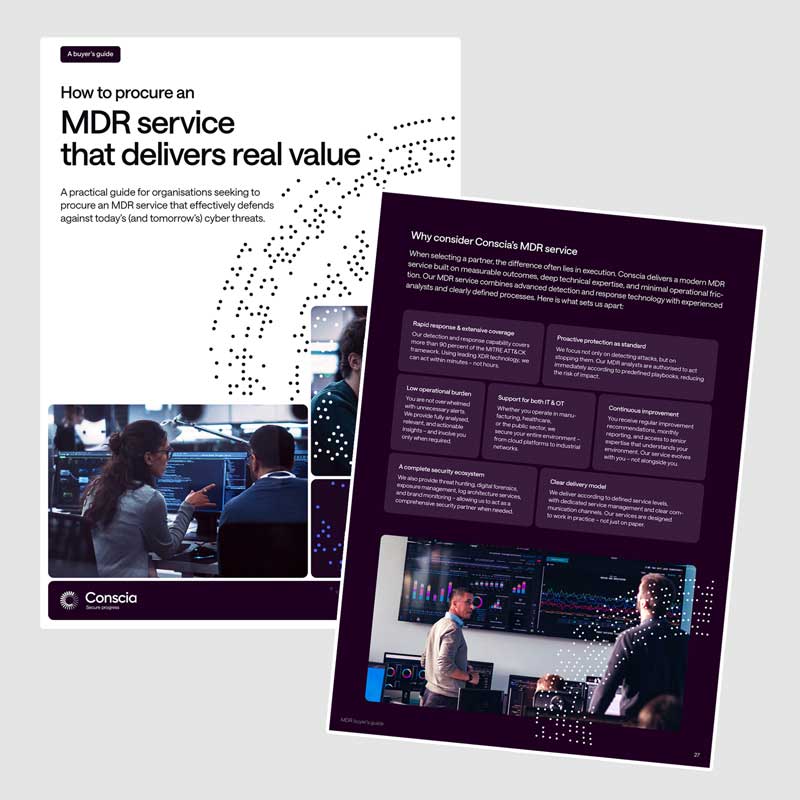
Not all MDR services are created equal. This guide helps you ask the right questions, avoid the most common mistakes, and choose a partner that actively reduces your risk.

From evaluation criteria to contract: a structured approach to MDR procurement
Modern cyber threats don’t wait for business hours. Attackers move fast, exploit identity gaps, and increasingly operate as automated, professional organisations. Prevention alone is no longer enough, and alert-only monitoring doesn’t stop attacks.
That’s why more organisations are turning to Managed Detection & Response (MDR). But MDR is a broad term. Some providers deliver real, 24/7 expert-led detection and active response. Others deliver little more than alerts. Knowing the difference before you sign a contract is what this guide is about. This buyer’s guide walks you through the full procurement journey — from defining scope and structuring your tender, to evaluating providers against criteria that reflect operational reality, not just marketing claims.
Detection without response does not reduce risk. The ability to act — not just alert — is what transforms security monitoring into effective risk reduction
Insights from the MDR buyer’s guide
-> Understanding the landscape
Why the market has shifted from traditional managed SOC to MDR, and why detection without response leaves organisations exposed. This section explains the key terminology and concepts you need to evaluate the market with confidence.
-> What good looks like
A clear breakdown of what a modern MDR service must deliver: 24/7 live analyst coverage, end-to-end incident lifecycle management, active containment, and continuous improvement. Includes a comparison of XDR and SIEM as the technological foundation of an MDR service.
-> Structuring your procurement
How to define scope, avoid open tenders that lead to superficial comparisons, and design an evaluation framework based on outcomes rather than tools or licence models.
-> Evaluating providers
The quality and selection criteria used by mature organisations — covering analyst expertise, certifications, MDR maturity models, references, and governance. Plus: the most common pitfalls to avoid.
-> Making the decision
A complete procurement checklist you can use directly in your RFI or RFP process, including must-have requirements around MITRE ATT&CK coverage, response authority, transparency, and pricing model clarity.
Selecting an MDR service provider is a risk transfer and continuity decision, not a standard IT sourcing exercise.

Why read this guide?
- Avoid costly mistakes: understand the difference between providers that alert and providers that act, before it matters
- Structure a better procurement process: use real-world tender criteria and a practical checklist to evaluate MDR providers fairly and thoroughly
- Understand what you’re buying: get clarity on XDR vs. SIEM, detection coverage, response authority, and what operational governance should look like
- Reduce internal burden: learn how a well-chosen MDR service should take operational pressure off your team, not add to it
- Make a decision you can stand behind: with a structured approach that prioritises capability, measurable outcomes, and long-term partnership potential
Who is this guide for?
This guide is written for C-level executives, procurement departments, and senior risk owners responsible for sourcing or renewing an MDR service. It is equally relevant for security leaders who want to strengthen their internal evaluation criteria or assess the quality of an existing provider relationship.
The recommendations are based on real-world tender experience and apply to both private- and public-sector organisations across regulated and non-regulated environments.


Related