Event
Conscia Briefing: Zero Trust requires consolidation
Security silos are not new. We’ve lived with them for years. But with machine identities, AI agents, and machine-speed threats, they are no longer sustainable. In 25 minutes, we’ll show you why consolidation has gone from ambition to necessity, and how firewalls, SSE, and AI security are becoming a cohesive part of Zero Trust.

Octavio Chira
CISO & Business Area Manager Cybersecurity, Conscia Sweden
Date & time
November 26, 2026 - 10:00 - 10:25 (CET)
Where
Online
Language
English
Target audience
This session is for people responsible for security, risk, or IT strategy who need to balance growing security requirements with cost, skills, and complexity. This may include CIOs, CISOs, security managers, security architects, and IT infrastructure managers. You don’t need to be facing a major transformation project. It’s enough to recognise that the next new tool is not the answer.

More capabilities. Fewer silos. More control.
Every new security need has received the same answer: one more product, one more policy, one more console. Everyone knows this is not sustainable. Until now, however, it has been possible to live with it.
This is no longer possible.
Machine identities outnumber human identities. AI agents act on their own. Employees use AI services that no one has approved. And we need more security capabilities than ever. If we continue to put them in separate tools, the architecture becomes too complex to operate, change, and defend. Complexity has become a risk in itself. What has changed is that the alternatives now exist. Zero Trust has been developing for years, but the platforms were not ready. Now they have caught up.
During this webinar, we shift the focus from the network to the security layer: the firewall, SSE, and AI security. We show how these capabilities connect in a Zero Trust architecture, with shared policies and unified visibility.
The goal is not to build one big platform for the sake of it. The goal is an architecture that can be understood, controlled, and developed.
In 25 minutes, you will:
- Understand why silos have gone from a known inconvenience to an acute risk.
- See why the firewall is not dead, but how it has evolved.
- Understand how SSE moves access from the network to identity, supporting a gradual move from VPN to ZTNA.
- Learn a three-step approach to AI security: visibility, control, and protection.
- See how consolidation can provide more capabilities with fewer tools and a lower operational burden.
- Get hands-on tips: start small, prove the value, and build on it.
Why participate?
Most organisations have already invested in firewalls, VPNs, web filters, and cloud security. But few have managed to get these technologies to share policies, visibility, and operations. For a long time, this has cost time and money. Now, it also creates security risk.
The session gives you an architectural perspective on how to move from fragmented to cohesive security without replacing everything at once, and what can be handed over as a managed service.
About Conscia Briefing: shorter format, sharper focus
We know time is short. That’s why we created Conscia Briefing: a focused format that gives you the essentials of a current secure IT infrastructure topic in no more than 25 minutes. Just the essentials, presented by our experts with a focus on what matters to you.
Quick insights that move you forward.
About the speaker
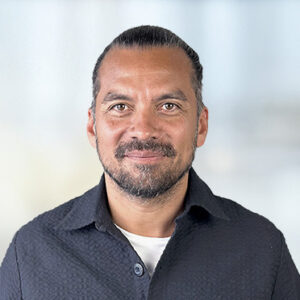
Octavio Chira
CISO & Business Area Manager Cybersecurity, Conscia Sweden
Octavio Chira is CISO and Business Area Manager for Cybersecurity at Conscia Sweden. His background includes cybersecurity, network architecture, and AI security. He is CISSP- and CCIE Security-certified and co-author of the report Cybersecure AI 2026. With more than 10 years of experience in IT infrastructure and cybersecurity, Octavio is a recognised industry expert.
Octavio Chira
CISO & Business Area Manager Cybersecurity, Conscia Sweden
Date & time
November 26, 2026 - 10:00 - 10:25 (CET)
Where
Online
Language
English
Target audience
This session is for people responsible for security, risk, or IT strategy who need to balance growing security requirements with cost, skills, and complexity. This may include CIOs, CISOs, security managers, security architects, and IT infrastructure managers. You don’t need to be facing a major transformation project. It’s enough to recognise that the next new tool is not the answer.




Important Update for All Using Certificates for Single Sign-On
Do you use Kerberos SSO with certificate-based authentication (CBA), e.g., for validating intranet and file/print servers? If so, read on! Since May 2022, Microsoft has been working on initiatives to ...
Related