Case
Nordic Leisure Travel Group: A digital business where time matters
Nordic Leisure Travel Group relies on observability to keep a fully digital travel business running. With managed observability services from Conscia, NLTG gains real‑time insight, faster incident response, and data‑driven decisions where time and availability directly impact revenue.

Project type
For Nordic Leisure Travel Group, observability is vital to creating value for stakeholders. Experts from Conscia Observability support NLTG’s development teams as a centre of excellence through managed services, becoming an integral part of their day-to-day operations.
Keywords
Client
Nordic Leisure Travel Group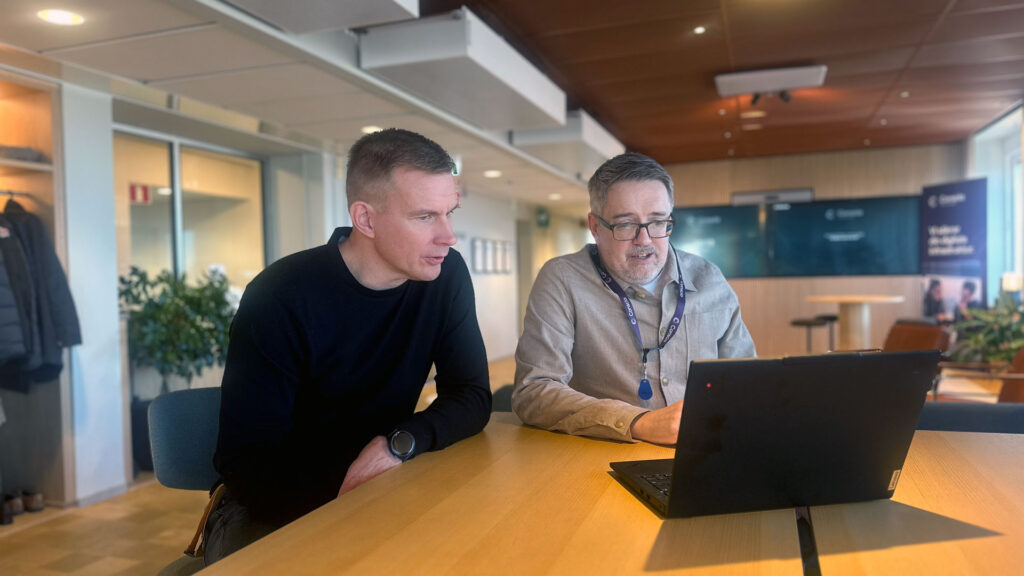
For Nordic Leisure Travel Group, observability is vital to creating value for stakeholders. Experts from Conscia Observability support NLTG’s development teams as a centre of excellence through managed services, becoming an integral part of their day-to-day operations.
Nordic Leisure Travel Group (NLTG) is the largest tour operator in the Nordics and brings together businesses across the travel value chain. With some of its best-known brands including Ving, Globetrotter, Tjäreborg and Spies, its tour operators, airlines, hotels, and supporting services all operate under the same group.
Sami Breinholt, Head of Technology Services at NLTG, has been with the company long enough to see the business change completely.
– When I started, I drove around the Nordics visiting our physical stores, and at the time, travel was sold face to face. Stores were central, and technology played a supporting role. Today, NLTG operates as a fully digital travel business. Customers often book, pay, make changes, and contact support through websites and mobile applications outside of traditional office hours, when people plan and manage their trips.
That reality creates a strong dependency on technology.
– If customers can’t book, can’t get on their bus, can’t order food at the hotel, or if they are unable to get their luggage onto the plane, then people start calling my team. Time really is key.
In his role, Sami is responsible for what happens when things go wrong. When incidents occur, identifying the root cause and acting quickly can have a direct impact on both customers and revenue.
This is the context in which observability becomes a critical requirement for running a digital travel business, where time and availability are inseparable from business performance. That is why NLTG works with Conscia Observability.
– I’m used to working with very talented people. Everything in my organisation is in-house, so when I work with partners, they must be better than us. That’s why we work with Conscia.
From monitoring systems to understanding impact
By the time observability became a strategic concern, NLTG already had experience with monitoring and logging, and had tried different platforms and ways of logging and analysing data.
Eventually, they invested more heavily ina new monitoring tool that suited their needs specifically. That was when Conscia Observability came into the picture.
The observability tool we have is really, really good. It’s a Rolls-Royce. And if you work with a Rolls-Royce, you need to drive it like a Rolls-Royce.
Sami Breinholt
Head of Technology Services at NLTG
Initially, observability was managed centrally, with monitoring created and maintained for development teams and internal specialists carrying most of the responsibility. In that setup, the model worked. As the organisation moved deeper into cloud‑based architectures, responsibility shifted, and observability needed to become part of everyday development work.
– It’s easy to waste money on a tool like this if you don’t use it properly. That’s when we started working even more closely with Conscia. They know how to drive a Rolls-Royce.
At that point, the central question changed from which tools to use to whether the organisation had the experience and support to use them in a way that matched the scale and criticality of the business. The collaboration became even closer.
Trusted technical partners
Attention gradually turned to the people involved in making observability work in practice. Over the years, Sami has built and led teams across a wide range of technical disciplines, all in-house, and this has shaped how he approaches collaboration.
– It’s important that our partners bring strong expertise within their field. That’s why we have worked with Conscia for several years. They are amazing, real rockstars, and they continuously add valuable competencies that help us improve, Sami says.
Conscia Observability’s specialists worked directly alongside NLTG’s teams, providing practical support closely tied to daily work. They helped developers in areas where internal experience was limited, especially as more advanced use cases appeared.
Sami describes the collaboration as something that happens continuously rather than through formal handovers.
– They help our developers build advanced things that we don’t know ourselves, doing it with us as a part of our teams and groups, so that we learn. We have regular meetings with the technical experts and our developers, he says.
Over time, this way of working created familiarity and trust. As Sami puts it, the relationship has become an integral part of day-to-day operations.
I would say Conscia is a centre of excellence that we can reach out to, and their specialists are a part of our daily business.
Sami Breinholt
Head of Technology Services at NLTG
Advanced platforms matter, but only when the right people are involved in using them.
– Technology is technology. There are other good players out there. But together with the people, it becomes the right package for us. It really is a lot about people, he says.
How the collaboration works
As observability became part of everyday operations, the challenge shifted from access to expertise to continuity. Support needed to be available not only at key moments, but consistently over time, as systems evolved and teams changed.
This was where the managed service model took shape.
Rather than relying on ad hoc support, Conscia Observability became a steady part of the operating model. Expertise was available whenever needed, without formal escalation, and the collaboration adapted as organisational priorities shifted.
– At the start we bought licences, did some training, and started using the platform. That worked fine. But when we moved further into cloud and the development teams took more responsibility, we needed more than just licences.
What emerged was a way of working built around regular cadence and ongoing access. Developers knew where to turn when questions arose, whether related to new services, unfamiliar behaviour, or incidents that required deeper analysis.
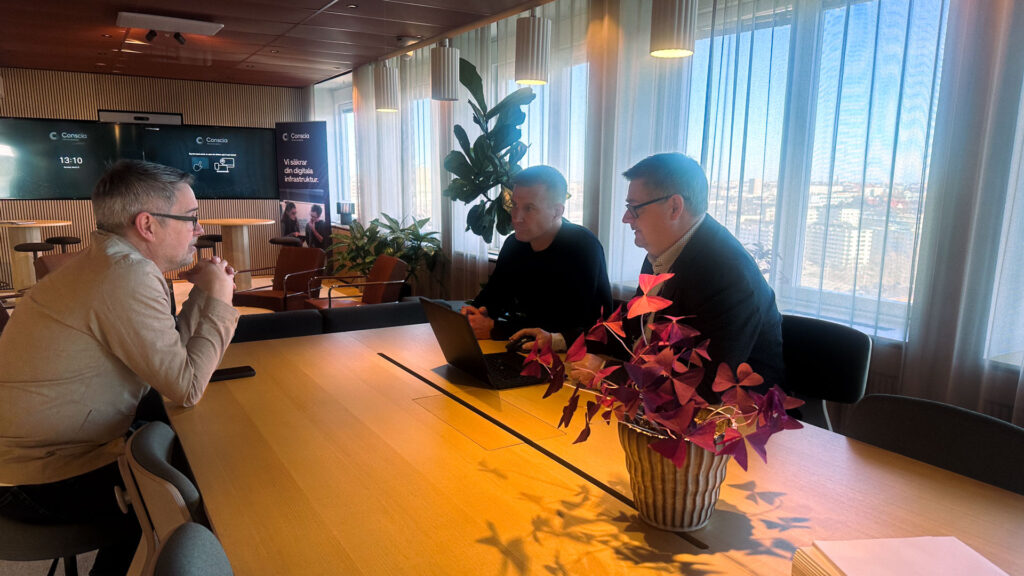
– We have weekly meetings with the technical experts and our developers. We can ask questions and look at real problems together.
This continuity was especially valuable when time was limited, allowing teams to build on shared context instead of starting from scratch.
The managed service didn’t replace internal ownership but provided stability, ensuring expertise remained available as complexity grew and the organisation scaled. Observability stayed embedded in daily work, supported by a model that kept advanced capabilities sustainable over time.

Conscia Observability
Decisions made under pressure
When incidents occur, the most difficult part is often not the technical complexity itself. It is deciding what matters most and acting with confidence while the situation is still unfolding.
For NLTG, that confidence increasingly comes from the ability to connect what happens in the systems directly to key business processes.
– We have good data now and are connecting the observability data to our sales channels. We can correlate any problems that occur in the systems that involve monetary transactions. We can see what we should be seeing and quickly identify a drop when something is happening in any of our systems.
This visibility has reshaped incident handling. Instead of relying on assumptions, teams can see exactly when technical issues affect sales and how significant the impact is, and that clarity helps set real‑time priorities and focus on what matters most.
For development teams, observability data now plays a broader role—used not only after the fact, but also during decision‑making.
– Without the data and the dashboards, developers just say, “My code is working, it’s fine.” But seeing the bigger picture helps them understand that we are losing money. We want to be more data-driven.
In this way, observability supports clearer decision-making when time is limited and the consequences are real.
Direction, not destination
Looking ahead, observability is not treated as a finished initiative or a clearly defined end state. It continues to develop alongside the business, shaped by where complexity and dependency increase.
So far, much of the focus has been on digital channels and sales, but other parts of the organisation are now coming into view.
– We are also looking at our airline, Sunclass Airlines, considering what we should monitor there in a better way, and how observability can be part of that journey, too?
The ambition remains to extend the same clarity to more areas of the operation without adding unnecessary complexity. As systems evolve and responsibilities shift, observability must stay useful for the people closest to the work.
Consolidation is also ongoing. Over time, multiple logging and monitoring tools have accumulated, and reducing that landscape while making better use of existing platforms is now a priority.
– We still have some work to do, but some teams have already stopped using other platforms and are pushing everything into one place. Then Conscia’s experts help them learn how to analyse it properly. We want to use the platform more. But the important part is that our developers really know it and use it for the right things. Conscia helps with that.
The emphasis is on maintaining an approach that scales with the organisation and supports good decisions as complexity increases. That continuity, more than any specific tool or setup, is what gives the work its long-term value.
– The people stay the same. They are what’s important – we couldn’t do it without the Conscia Observability team, concludes Sami Breinholt.
Project type
For Nordic Leisure Travel Group, observability is vital to creating value for stakeholders. Experts from Conscia Observability support NLTG’s development teams as a centre of excellence through managed services, becoming an integral part of their day-to-day operations.
Keywords
Client
Nordic Leisure Travel Group


Do you have any questions?
Contact your nearest Conscia market – we’d love to talk to you and answer any questions you might have.
Related